
Easy Salmon Bites: How to Make a Flavorful Dinner in 4 Simple Steps
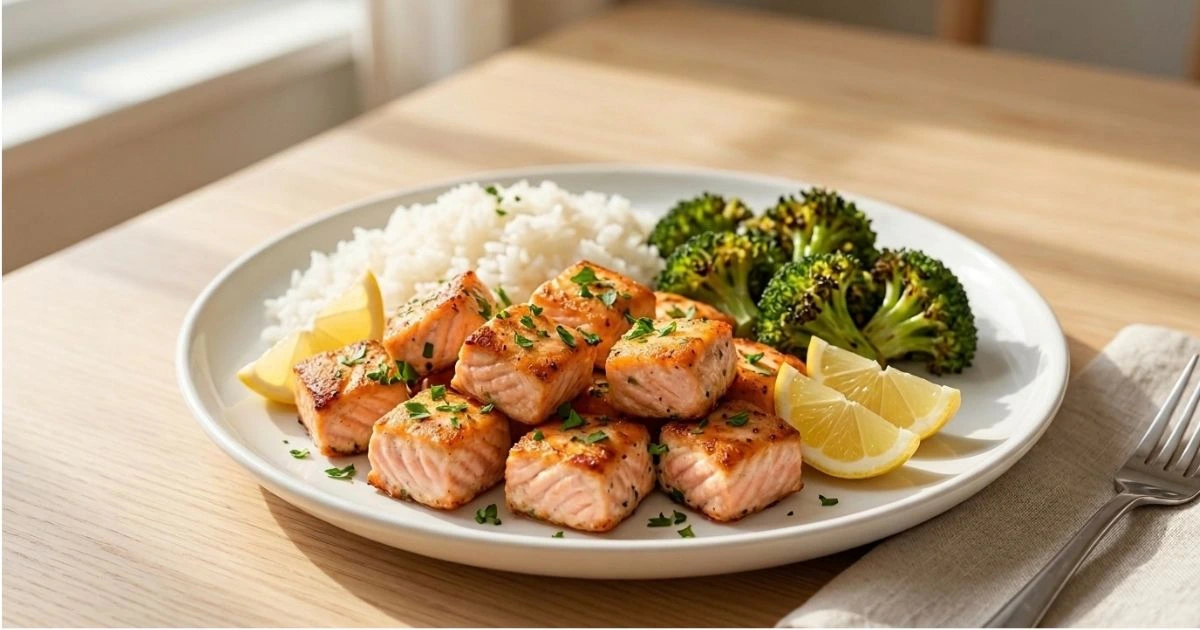
If fish only needs to reach 145°F (63°C) for safe cooking, could keeping it in the air fryer longer be the reason it turns dry? USDA guidance makes temperature—not an extra few minutes—the useful benchmark for doneness.
These salmon bites combine tender centers, lightly browned edges, and a savory honey-garlic coating. These air fryer salmon bites need no breading, lengthy marinade, or complicated sauce.
With four simple steps and everyday ingredients, you can make a flavorful dinner that works equally well in rice bowls, tacos, or fresh salads.
Table of Contents
Ingredients List
Serves: 4
Equipment: Air fryer, mixing bowl, tongs, and instant-read thermometer.
Gather these ingredients:
- 1 pound (454 g) skinless salmon: Remove pin bones and cut into 1-inch cubes.
- 1 tablespoon olive oil: Helps the seasoning coat evenly; avocado oil also works.
- 1 tablespoon reduced-sodium soy sauce: Adds savory depth. Substitute certified gluten-free tamari when needed.
- 1 tablespoon honey: Provides gentle sweetness; maple syrup offers a different flavor.
- 1 teaspoon garlic powder: Distributes evenly without fresh garlic pieces scorching.
- 1 teaspoon smoked paprika: Adds warm color and subtle smokiness.
- ¼ teaspoon black pepper: For mild background heat.
- 1 tablespoon lemon juice: Add after cooking for a bright finish.
Optional garnishes include chopped parsley, sliced scallions, and lemon wedges. Prefer a little heat? Add a pinch of chili flakes.
Timing
| Stage | Time |
|---|---|
| Preparation | 10 minutes |
| Preheating | 3 minutes |
| Cooking | 7–10 minutes |
| Total | 20–23 minutes |
These estimates assume one batch. A smaller basket may require two batches, adding another 7–10 minutes.
Prep takes approximately as long as cooking, making this a practical dinner when you want minimal hands-on work.
How to Make Salmon Bites
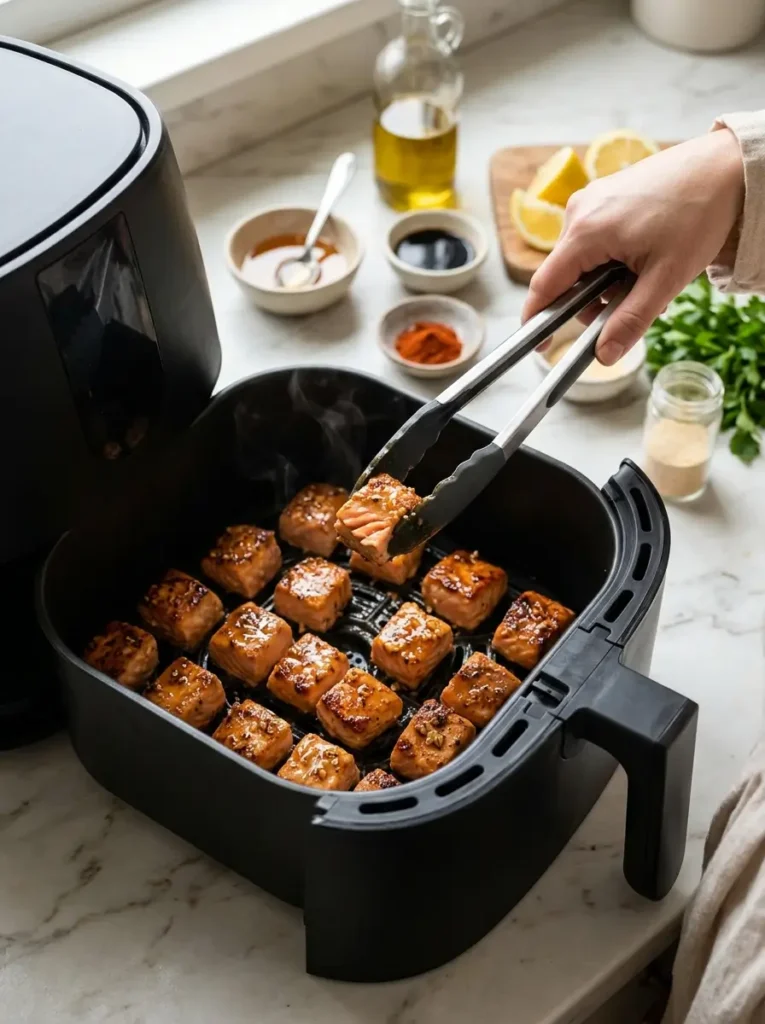
Step 1: Prepare Evenly Sized Salmon
Pat the salmon thoroughly dry with paper towels, then cut it into approximately 1-inch cubes.
Consistent sizing matters: small pieces can dry out while larger chunks remain undercooked. If your fillet has a thin tail section, cook those pieces separately or check them earlier.
Keep the salmon refrigerated until you’re ready to prepare it, and wash your hands and cutting board after handling raw fish.
Step 2: Coat With the Honey-Garlic Seasoning
Combine olive oil, soy sauce, honey, garlic powder, smoked paprika, and pepper in a bowl.
Add the salmon bites and fold gently until every piece has a thin, glossy coating. Avoid vigorous stirring, which can break the delicate flesh.
There’s no marinating time required. Reserve the lemon juice for serving so the finished dish tastes bright without adding extra moisture before cooking.
Step 3: Air Fry Until Just Cooked
Preheat your air fryer to 400°F (200°C) for approximately three minutes, following your appliance’s instructions.
Arrange the salmon bites in one layer with small gaps between pieces. Leave excess coating in the bowl.
Cook for 7–10 minutes, gently turning halfway through if needed. Begin checking at six minutes because appliances and cube sizes vary.
Insert a thin thermometer probe sideways into the center of several larger pieces. Cook until they reach 145°F (63°C). Color alone cannot confirm safe doneness.
Step 4: Finish and Serve
Transfer the cooked salmon bites to a clean plate. Drizzle with lemon juice and scatter over your chosen herbs.
Serve immediately for the best contrast between browned edges and moist, flaky centers. Taste before adding salt: the soy sauce may provide enough seasoning.
For dipping, pair with plain yogurt mixed with lemon and dill.
No-honey option: For a savory garlic-paprika version, toss the salmon with 1 tablespoon olive oil, 1 teaspoon smoked paprika, 1 teaspoon garlic powder, ½ teaspoon onion powder, ½ teaspoon fine salt and ¼ teaspoon black pepper instead of the honey-garlic coating. Cook the same way and finish with lemon juice.
Preparing ahead: Refrigerate the cut raw salmon separately from the seasonings and cook it within 1 to 2 days of purchase.
Nutritional Information
Estimated per serving: One-quarter of the recipe, excluding sides and optional garnishes.
| Nutrient | Approximate amount |
|---|---|
| Calories | 290 kcal |
| Protein | 24 g |
| Total fat | 19 g |
| Saturated fat | 4 g |
| Carbohydrates | 6 g |
| Total sugars | 5 g |
| Fiber | Less than 1 g |
| Sodium | 280 mg |
Estimates assume farmed Atlantic salmon and all coating consumed. USDA nutrient data hosted by Purdue University lists approximately 20.4 grams of protein per 100 grams of raw farmed Atlantic salmon. Actual totals vary with salmon species and ingredient brands.
Healthier Alternatives for the Recipe
- Reduce added sugar: Halve or omit the honey; expect less caramelization.
- Lower sodium: Use half the soy sauce and boost flavor with lemon zest and herbs.
- Make it gluten-free: Choose certified gluten-free tamari and check seasoning labels.
- Add more fiber: Serve with lentils, quinoa, or brown rice and vegetables.
The base recipe is dairy-free. For a soy-free version, omit soy sauce and season with lemon zest, garlic, and a modest pinch of salt.
Serving Suggestions
Build a colorful bowl with salmon bites, rice, cucumber, shredded carrots, and avocado. Keep the vegetables crisp for a satisfying contrast.
For family dinners, offer tortillas, cabbage, and yogurt sauce so everyone can assemble their own tacos.
Prefer something lighter? Spoon the fish over leafy greens with chickpeas. For more weeknight inspiration, explore this chicken breast in air fryer recipe.
Using wild salmon: Leaner wild salmon also works but can dry out faster, so start checking it early.
Common Mistakes to Avoid
- Overcrowding: Trapped moisture limits browning. Cook in batches when necessary.
- Skipping drying: Surface water dilutes the coating.
- Adding extra honey: A thick sugary coating can scorch before the center cooks.
- Following the timer blindly: Check temperature early, especially with smaller cubes.
- Rough handling: Turn gently to keep the pieces intact.
Storing Tips for the Recipe
Refrigerate leftovers in shallow, airtight containers within two hours, or one hour above 90°F (32°C). Keep your refrigerator at 40°F (4°C) or below, following USDA leftover-handling guidance.
Use refrigerated salmon bites within 3–4 days, or freeze for up to three months for best quality, as recommended in USDA fish-storage guidance.
Reheat only the portion needed to 165°F (74°C). Gentle heating helps limit drying.
Conclusion
These salmon bites make dinner manageable with simple seasoning, even cutting, and careful temperature checks. Try them tonight, then share your favorite bowl, taco, or salad combination in the comments!
FAQs
Can I use frozen salmon?
Yes. Thaw it in the refrigerator first, then pat dry before cutting.
Will the salmon become crispy?
Expect lightly browned edges and tender centers rather than a crunchy, breaded crust.
Should I remove the skin?
Skinless salmon works best for evenly coated, easy-to-eat cubes.
Can I double the recipe?
Yes. Double the ingredients and cook in batches, keeping each batch in a single layer.
Why are my salmon bites dry?
Overcooking or uneven cubes are common causes. Cut consistently and start checking temperature early.