
Air Fryer Chuck Roast: Easy Cooking Guide
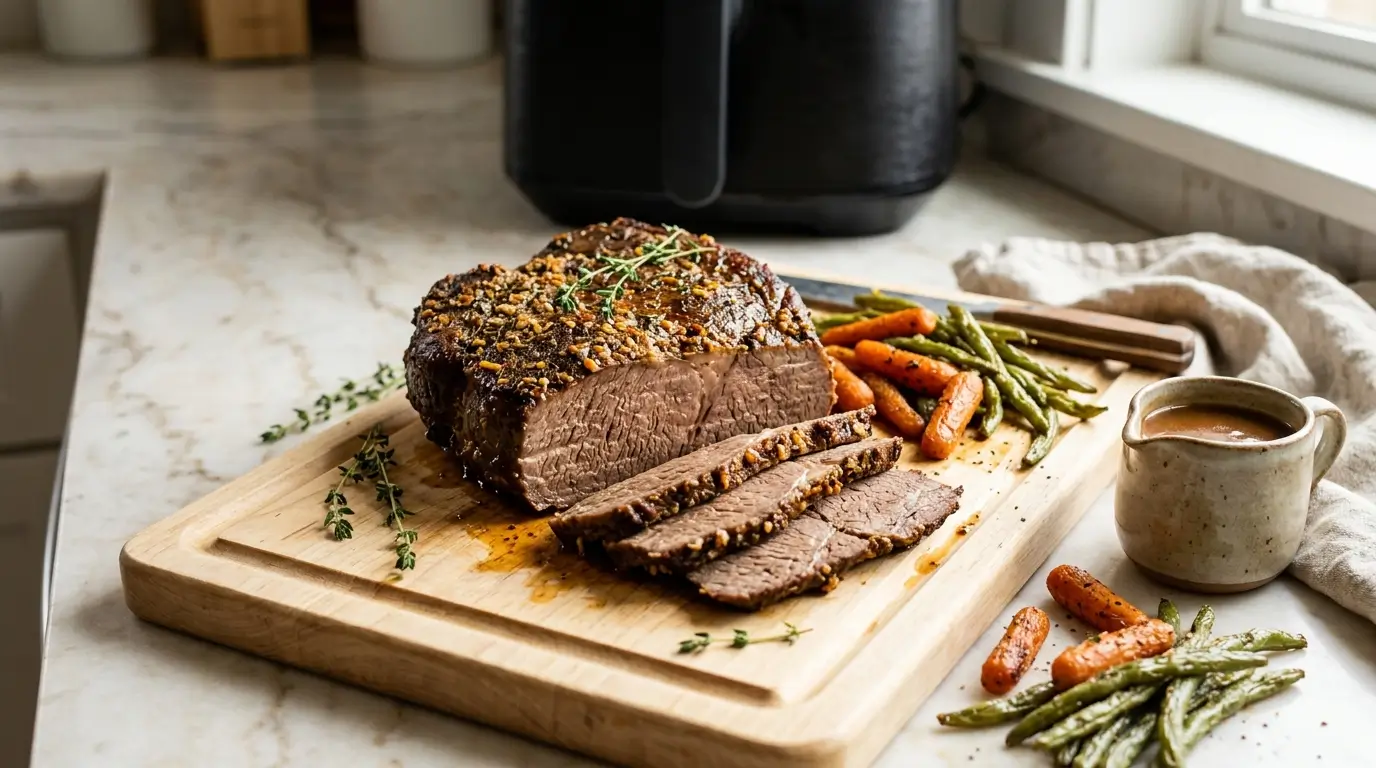
Can a beef roast reach the recommended safe temperature of 145°F and still taste chewy? Absolutely. Safety and tenderness are different goals, especially with shoulder cuts. This air fryer chuck roast guide explains how to achieve a browned crust and flavorful, thinly sliced beef while setting realistic expectations about texture.
According to USDA beef temperature guidance, whole beef roasts should reach 145°F before leaving the heat, followed by at least three minutes of rest. Chuck also needs appropriate cooking conditions for tenderness.
Expect sliceable air fryer chuck roast, rather than shreddable pot roast. For falling-apart beef, choose braising or pressure cooking instead.
Table of Contents
Ingredients List
This air fryer chuck roast serves approximately six people. Gather these simple ingredients:
- 2½ pounds boneless chuck roast: Choose an evenly shaped piece with moderate marbling.
- 1 tablespoon olive oil: Substitute avocado oil if preferred.
- 1 teaspoon fine salt: Reduce for lower sodium.
- 1 teaspoon black pepper: Freshly ground adds aromatic warmth.
- 1 teaspoon garlic powder: Coats evenly without fresh garlic scorching.
- 1 teaspoon onion powder: Adds mellow, savory depth.
- 1 teaspoon smoked paprika: Sweet paprika makes a milder substitute.
- 1 teaspoon dried thyme: Rosemary or Italian seasoning also works.
Keep optional gravy, fresh parsley, and prepared horseradish available for serving. Choose unsalted broth if making gravy, because the beef already carries seasoning.
You also need tongs, a sharp carving knife, and an instant-read thermometer. Your air fryer must accommodate the roast comfortably, with clearance around the meat and below the heating element.
Timing
Plan your air fryer chuck roast around temperature checks rather than a guaranteed finishing time:
- Preparation: 10 minutes.
- Preheating: Approximately 5 minutes, depending on your appliance.
- Cooking: Approximately 30–50 minutes; thicker roasts may require longer.
- Resting: 15 minutes.
- Total: Approximately 60–80 minutes.
The cooking sequence draws on Instant Pot’s air-fried chuck roast method. Its initial high heat promotes browning before a gentler finish. These timings are estimates, not evidence that every roast cooks faster than an oven version.
For your first attempt, note the roast’s weight and thickness before cooking. Record the temperature at your first check, then adjust future meals using those observations. Your own appliance notes are more useful than assuming every basket model behaves identically.
Step by Step Instructions
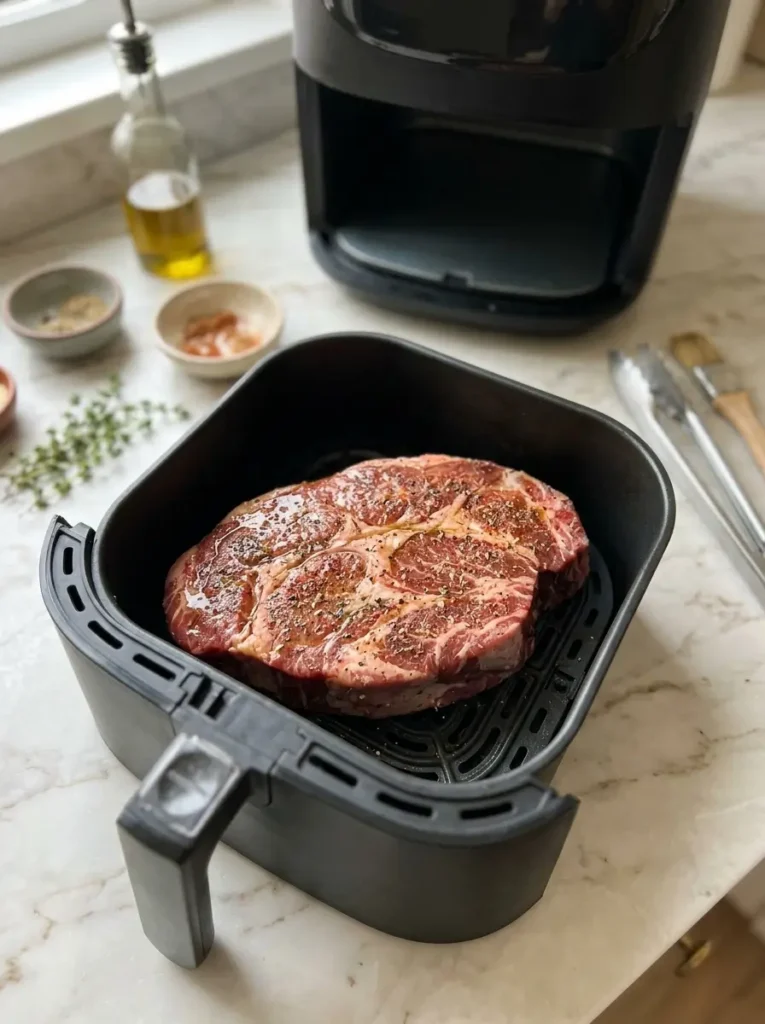
Step 1: Prepare the Air Fryer Chuck Roast
Thaw your roast completely in the refrigerator. Pat its surfaces dry using paper towels, then remove thick exterior fat while preserving some marbling.
Check the fit before preheating. The basket should close easily, and the meat should leave room for circulating air. If your roast is too large, choose a smaller piece or another cooking appliance.
Step 2: Season Every Side
Combine the salt, pepper, garlic powder, onion powder, paprika, and thyme. Brush the meat with olive oil, then press the seasoning across the top, bottom, and sides.
For advance preparation, refrigerate the seasoned beef in a covered container overnight. This helps organize dinner preparation, but seasoning does not replace the cooking time needed to soften connective tissue.
Step 3: Begin With High Heat
Preheat according to your appliance instructions, targeting 400°F (205°C).
Place the beef directly in the basket and cook for 15 minutes. Keep the basket uncluttered so the surface can brown evenly.
Avoid adding sugary sauces at this stage; they can scorch before the center cooks. Save barbecue sauce or sweet glazes for serving, or apply cautiously near the end.
Step 4: Lower the Temperature
Turn the roast with tongs and reduce the temperature to 325°F (163°C). Continue cooking for approximately 15–25 minutes before checking progress.
Insert your thermometer into the thickest central section, avoiding large fat pockets. Check several locations. Your air fryer chuck roast must reach 145°F in its coolest measured section before removal.
If necessary, continue in short intervals, checking frequently. Do not judge doneness by crust color or rely on anticipated temperature increases during resting.
Step 5: Rest and Carve Carefully
Transfer the roast to a clean cutting board and loosely tent with foil. Rest for 15 minutes, exceeding the minimum three-minute safety rest.
Identify the muscle fibers and slice thinly across them. Chuck contains multiple muscles, so separate sections when necessary and adjust your cutting direction. Thin, cross-grain slices improve the eating experience of this naturally firmer cut.
Serve promptly with warm gravy or juices collected from the cooked beef.
If your air fryer chuck roast finishes before the side dishes, use the resting period to finish plating and prepare gravy. Keep a clean serving platter ready, and wash utensils that touched raw beef before using them again. Never return cooked meat to an unwashed preparation plate.
Nutritional Information
For one-sixth of this air fryer chuck roast, excluding gravy and sides, approximate nutrition is:
- Calories: 350–430 kcal.
- Protein: 35–40 grams.
- Total fat: 22–30 grams.
- Saturated fat: 8–11 grams.
- Carbohydrates: 1–2 grams.
- Fiber: Less than 1 gram.
- Sodium: 450–550 milligrams.
These are broad ingredient-based estimates, not laboratory measurements or a verified nutrition-label calculation. Marbling, trimming, salt measurement, rendered fat, and serving size affect the results. Beef also contributes iron, zinc, and vitamin B12.
For tighter nutritional tracking, weigh your portion and use a database entry matching the actual cut and cooked preparation. Calculate sauces and side dishes separately.
Healthier Alternatives for the Recipe
Adapt air fryer chuck roast to your preferences with practical adjustments:
- Lower sodium: Halve the added salt and increase thyme, paprika, or pepper.
- Less saturated fat: Trim visible exterior fat and serve smaller beef portions.
- More fiber: Add lentils, beans, cabbage, or other vegetables alongside the meat.
- Dairy-free: Use olive oil and broth-based gravy rather than butter or cream.
- Gluten-free: Check stock and seasoning labels; thicken gravy with cornstarch instead of wheat flour.
A smaller serving of beef paired with generous vegetables can make the meal easier to balance. Choose adaptations you enjoy rather than removing every source of richness.
Serving Suggestions
Serve air fryer chuck roast with mashed potatoes and green beans for a familiar dinner. Spoon warm gravy over the sliced meat immediately before bringing it to the table.
For colorful sides, explore our air fryer carrot recipes. Cook vegetables separately when basket space is limited, or prepare them while the roast rests.
Prefer a lighter plate? Try cauliflower mash, roasted broccoli, or a cabbage salad with lemon dressing.
Thin beef slices also suit sandwiches with mustard and caramelized onions. For another dinner idea, browse our air fryer lamb chop recipes, or explore more air fryer recipes.
Common Mistakes to Avoid
- Expecting pot-roast tenderness: Chuck is rich in connective tissue. Beef industry cut guidance recommends braising or pressure cooking for this cut.
- Trusting weight alone: Thickness and shape strongly influence how quickly the center heats.
- Crowding the basket: Restricted airflow can produce uneven browning and cooking.
- Skipping temperature checks: A dark crust does not establish safe internal doneness.
- Slicing with the grain: Long muscle fibers make each bite harder to chew.
- Cooking longer without moisture: Extended uncovered air frying can dry the beef before it becomes tender.
Storing Tips for the Recipe
Divide leftover air fryer chuck roast into shallow containers and refrigerate promptly. Follow USDA leftover handling guidance: refrigerate within two hours, or one hour when temperatures exceed 90°F (32°C).
Keep the refrigerator at 40°F (4°C) or below, and use cooked beef within three to four days. Freeze portions for longer storage, preferably with a little broth to protect eating quality.
Thaw frozen leftovers in the refrigerator. Reheat covered slices with broth until the center reaches 165°F (74°C), following USDA reheating guidance. Avoid repeatedly reheating the whole batch; warm only the portion you need.
For meal planning, reserve a portion of air fryer chuck roast before adding sauce. This lets you choose different flavors later: mustard for sandwiches, cumin and lime for wraps, or broth and vegetables for soup. Keep those portions refrigerated promptly, and follow the same storage limits as the rest of the batch. Label each container with its cooking date.
Conclusion
Air fryer chuck roast works best when you want savory, browned beef served in thin slices. Choose a manageable roast, monitor its temperature, rest it properly, and carve across the grain. Remember that quick air frying will not reproduce a long braise. Try the recipe, rate your results, and share your appliance model and roast thickness in the comments.
FAQs
Can air fryer chuck roast become fall-apart tender?
Not reliably with this quick method. Choose moist, extended cooking or a suitable pressure-cooker recipe for shreddable beef.
Can I cook the roast from frozen?
This guide assumes fully thawed beef. A frozen center makes the suggested timing unsuitable.
Why is my beef chewy despite reaching 145°F?
That temperature addresses safety, not connective-tissue breakdown. Chuck can remain firm when quickly roasted.
Should I marinate it overnight?
You can refrigerate it with seasoning overnight for convenience. Marinades mainly flavor the surface and cannot guarantee tenderness throughout a roast.
Can vegetables cook beside the beef?
Only if your basket has sufficient space. Separate cooking gives better control over airflow and differing cooking times.